Wednesday, December 9, 2020

[The Knightly Hub] The Livonian Brothers of the Sword


 The Livonian Brothers of the Sword

   Commonly referred to in modern times as the Livonian Brothers of the Sword, Livonian Knights, or the Sword Brethren, this order began in 1202 as the Order of the Knights of the Sword. The order was founded by Albert von Buxhoevden, third bishop of Livonia, with approval from Pope Innocent III. Its primary goal was to make Christianity the dominant religion by forcibly converting Livonian pagans. The order was officially blessed in 1204, and (like many others) shaped itself in the image of the Knights Templar. The Knights of the Sword all hailed from nobility, accepting vows of obedience, poverty, and celibacy. The grand master, once elected by an assembly of knights, would serve for life with the ability to dictate most aspects of the order. The order also consisted of clerics and artisans, who observed no fighting role. 

    The Swordbrothers became the dominant military force in its area of focus. Regardless, it still faced strong resistance from certain peoples, including the Semigallians who, together with Samogitians, would later deliver a crushing defeat to the order at the Battle of Saule (1236). Grand master Volquin was killed in the fight, leading to an abrupt loss of the Knights' military authority. Additionally, both the Holy Roman emperor (Frederick II) and Pope Gregory IX criticized the order for abuse of both pagans and recent Christian converts. 

    It seemed that the Swordbrothers' primary intent was to develop its own fiefdom rather than contribute to the Catholic Church. As a result, in 1237, Gregory IX disbanded the order and forced it to integrate into the Teutonic Knights. This gave the grand master of the Teutonic Knights the authority to determine who looked after the Livonian branch, which maintained its hold on the region despite earlier losses. This hierarchy persisted until 1525 when the Teutonic Knights were forced to give up Prussia, granting autonomy to the Livonian Brothers of the Sword as the former began to shrink in on itself. Sadly, the order was forced to disband (again) in 1561 after it lost control of Livonia during the Livonian War (1558-1583) due to neighboring states striking an interest in the area- or rather, in not letting other states control the area.


Further Reading

The Editors of Encyclopaedia Britannica. “Livonia.” Encyclopædia Britannica. ©2020 Encyclopædia Britannica, Inc. 13 August 2010. Accessed 9 December 2020. <https://www.britannica.com/place/Livonia-historical-region-Europe>.


The Editors of Encyclopaedia Britannica. “Order of the Brothers of the Sword.” Encyclopædia Britannica. ©2020 Encyclopædia Britannica, Inc. 25 October 2011. Accessed 8 December 2020. <https://www.britannica.com/topic/Order-of-the-Brothers-of-the-Sword>. 


Anonymous. “Livonian Order of Knights / Order of the Brothers of the Sword.” The History Files. Copyright © 1999-2020 Kessler Associates. All rights reserved. Publication Unknown. Accessed 8 December 2020. <https://www.historyfiles.co.uk/KingListsEurope/EasternLivonianKnights.htm#top>.

Smirl, J.D. “A Wayward Crusade: The Short Life of the Livonian Swordbrothers.” J.D. Smirl: Graphic Art, Illustration, Writing, and Bookbinding. © Jordan D. Smirl. Published 27 May 2019. Accessed 8 December 2020. <https://jdsmirl.wordpress.com/writing/livonian_swordbrothers/>. - I’m somewhat surprised I didn’t come across this source sooner. While the majority of Smirl’s work doesn’t directly coincide with what I myself am doing, I’d imagine his blog to be rather fascinating to other lovers of art, history, and art history. I don’t have any experience commissioning him, so I can’t review that aspect of his work, but I recommend clicking through some of his galleries if nothing else. There is a specific one I found intriguing in which he compiles references for medieval armor. Here's a link for those interested.


Sunday, December 6, 2020

[Status - Brehon] Body of the Senchus Mor

(Here's a late post on the Senchus Mor. This one took a while because it covers the first volume of the most significant piece of Brehon legal text).

     The first part of the Introduction of the Senchus Mor (different from the prologue) contains a religious and spiritual context, with many pages of plain theology and mythology, which is fairly odd for a legal text. It starts with the creation of the Earth and its geological and meteorological features, followed by its population by Adam and Eve, and claims about the Earth's astrological context. This part is an odd blend of potential old Druid beliefs washed over by Christian Canon. Christianisation often took this approach to slowly make Christianity more approachable and familiar to the people who were being Christianised, mixing Christian Canon with beliefs, mythology, and style of the native people. 

    This tells us a lot about what the Senchus Mor was aiming to be. It was not just a legal text pertaining to ruling civil legal disputes, it was also a piece of literature meant to teach Irish Gaels history (which we see more as mythology in retrospect) and philosophy. However, after the introduction, the tone and content changes quite a lot. There is slightly less blatant Christian Canon, and more references to purely Gaelic mythology. This shows the introduction, alongside the preface, were appendages to the text of the Senchus. However, the whole Senchus Mor is a collection of transcribed oral laws, legal precedents, and other written legal tracts, so the introduction and preface are not the only thing that stand out. 

    The text itself starts (on page 64 here) by introducing 'distress' via a long metaphor using parts of the story of the Cattle Raid of Cooley, a very famous myth. When mentioned in this text, distress means payment of some kind of property from a wrongdoer to a victim or someone associated with the victim as reparation for a wrongdoing. 

    The large typeface text is a more general text, while the small typeface text is elaboration on the larger text. This smaller text may have come from another actual written text, or it could have been written during the creation of the Senchus Mor. In the preface, it is claimed that the Senchus Mor is only a compilation of texts; however we determined in the previous post that it was most likely written up to several centuries after the creation of the Senchus Mor and was filled with inaccuracies. There is an even smaller typeface text that provides even more elaboration or correction to the small typeface text. 

    Nonetheless, the Cattle Raid story given in this section serves as a legal precedent. It goes through what crimes were committed and what punishments and corrective measures were enacted in response. It is impossible to know if this story actually occurred or not, but given the widespread nature of the Senchus Mor, and especially this story/myth even without the Senchus Mor, it was definitely used as a basis for many legal cases and had a profound impact on Ireland for several hundred years. 

    After the story of the Cattle Raid, the text gets into more concrete legal information. The story and reasoning behind the information is always given, hence why the vast majority of the Senchus Mor is precedent. The smaller and smallest text are always the most elaborate and concrete, restricting interpretation a little bit, which is very useful given that this is a widespread legal text with great authority.

    As soon as it gets into this direct legal information, a lot is revealed about Irish society at that time. Page 85 mentions a "court" making decisions about punishment for crimes, "advocates" who "aid" the criminal during the legal process, an eyewitnessing - all of which is mentioned in the large text, which means hopefully most information is not anachronistic. It then goes through lists of "seds," which are punishments, which include imprisonment.

    A lot is then revealed about classes and how they are each treated by the law. As seen in the post about marriage Law, women had fewer rights than men, especially if they were not teir husband's cetmuinter. We also saw that criminals and "outlaws" were treated differently, and the profession and amount of property one possessed had a lot to do with their status and thus treatment in the law. Here, all of this is similarly reflected. The text is always referring to the "Feini" in the context of the laws, which means free people (non-criminals or non-outlaws, non-slaves). What is extremely interesting is how those who cannot "bind" or "make" contracts, those "unqualified for the court" cannot "take distress" (p.85). It is unclear exactly what these terms mean, but this generally means that people with little legal education, and maybe even all illiterate people, cannot receive distress for crimes committed unto them. This shows a clear institutional oppression ingrained in society by legal classes ('judges' and kings). 

    What is also interesting is that the large text says 'kings' are on the same social status as "the orders of religion [and] learning," but that they can "decide against every class of persons." (p.79). This means that 'kings' had a lot of legal power over not only their subjects, but also any lower class than them, similar to many places in medieval Europe at the time and many years into the future. The term 'king' here probably doesn't only refer to High King, but also the other smaller 'kings' equivalent to Earls, Dukes, etc. This also means that 'kings' had somewhat equal power to the aristocracy (includes judges) and the clergy (Christian and potentially Druidic). 

    The following passage is also very revealing of how the law treated the layman: 

"No labourer, no 'fuidhir,' no imbecile vagrant, no shepherd, no cowherd, no cart-boy is distrained in a decision about debts due of himself or others, or for the regulations of a territory, but his foot is fettered or a chain put about his neck, and during his impri- soiiment he is not entitled to any food except the ' bochtan,' or the ' urchaelan,' or the cake of the noble festival with its obsoniurn, until their chiefs compel them to do their duty."

    This is interesting because it almost seems dismissive of lower classes. It seems as if if someone is of a lower class, they are not entitled to lighter punishments, and are instead placed in prison no matter the severity of the crime. This goes against what most people say about Brehon law, about it being light in centralised punishment and mostly void of imprisonment. This may passage may reflect a more modern introduction to the Law, after the influence of other European cultures had brought over these ideas.

    What is interesting about this copy of the Senchus Mor is the somewhat invasive marginalia. The person writing it never reveals their identity, but from the notes it seems they are someone who knows a lot of Gaelic, as they are ceaselessly correcting the translation on every page. These corrections change the meaning of the text quite drastically, which is why reading Gaelic proficiently would really help. Sine I cannot find any other translations, these margin notes help remind me that information gathered from translations is always subject to error. 

References


The text, Volume 1: Ancient Laws and Institutes of Ireland, volume 1 from Archive.org. https://archive.org/details/ancientlaws01hancuoft/page/64/mode/2up?

[This is an incredible, professional blog also on blogger that is full of solid recent scholarship on the topic, mentioning countless other useful sources. If my blog continues for many more years, this is what I would want it to end up like. What I particularly like is the work he is doing to sort out history and fictional fabrications, giving the field more solid objective information for use in further interpretation. This person is also the author of a different blog I used in a previous post.] Tichelaar, Tyler R. (2014, May 9.). Vennicni, Feni and Donegal. Dark Age History blogspot. https://darkagehistory.blogspot.com/2014/05/vennicni-feni-and-donegal.html

What is the Legal Definition of Distress. https://www.upcounsel.com/legal-def-distress

Bind. https://legal-dictionary.thefreedictionary.com/bind

Distrain. https://www.thefreedictionary.com/distrained

Wikipedia:

'Fergus mac Roich' 

'Ulster Cycle'

Thursday, December 3, 2020

[This Place is Not a Place of Honor] History Repeats Itself: Archeological Models for Nuclear Markers

  One of the greatest challenges in designing warning markers for a future so distant as (at least) 10 millennia is that it is impossible to run an accurate simulation to determine how a message will be received through years of cultural, political and societal change. Yet there are already plenty of experimental results which display the survival of meaning in a structure over thousands of years; we only need to look in the past. When considering their marker designs, the Human Interference Task Force, and later the Waste Isolation Pilot Plant team, used lessons learned from monuments throughout history to model their requirements. 

    Serving as the foremost archeology consultant for the HITF was Maureen Kaplan, who later contributed to the design panel of the WIPP project as well. The first distinction she used in her research was that historical markers were composed of 3 communication elements: Language, pictures, and symbols. Outlined in her report were 6 different historical examples of ancient markers surviving at least 1,000 years, including information on their location, history, material composition, intended purpose, state of preservation, and relevance to repository marker construction. 

    The first and likely most famous of the archeological examples are the Pyramids of Giza. One of the most impressive features of the already breathtakingly enormous structures is how long they’ve lasted, 5,000 years, which is half of the nuclear semiotic time frame, and for the most part they’ve remained both physically intact and recognizable in purpose: tombs for the rulers who constructed them. If records of Egyptian culture in historical documents, like the writings of Herodotus, Pliny the Elder, and Abd el Latif weren’t available to designate the intent of the great pyramids, the same intent could be gleaned from the numerous markers and writings inside the tombs themselves, displaying the efficacy of redundant linguistic and pictorial markers used in tandem with physical and symbolic ones. The structure of the pyramids has remained untarnished for a number of reasons, but mainly their immense bulk, which dampens the effects of erosion and discourages the quarrying of its materials or removal under new governments. 


    Utilizing size works for the pyramids, as they’re built to designate a certain spot, however, a nuclear repository would have to cover an area at least 14 times the size of a pyramid, and the devotion of resources to a pyramid of that size is impossible, or at the very least impossibly uneconomic. Additionally, over the centuries the tombs have been entered through under the pyramids and looted, aided by the fact that the written tradition around the pyramids informed people of the treasures inside. Hopefully any writing about nuclear waste repositories will avoid conveying the impression of having valuable contents, though this presents the possible benefit of adding buried markers to the system to discourage digging under the site (we’ll get back to this later in the post). Though nuclear waste markers with a pyramid’s shape and size would be inefficient, the pyramids are a testament to the longevity of a structure’s purpose through surrounding information. 

    The next archeological marker Kaplan examined are the Stonehenge megaliths in England. Out of the 6 archeological examples, these are the most similar in shape to the eventual waste marker proposals, and for good reason; a pattern of numerous standing stones around 13 feet high is physically imposing whilst still requiring less building resources as the pyramids, and even though around a third of the stones have been lost in the roughly 3500 years since the monument was finished, you can still tell each one is part of a greater formation due to their redundancy and proximity to each other. Stone seems to be a favorable material choice for markers, as proven by this example, which has survived both an unfavorably moist climate and an unfavorable political climate, standing strong amidst multiple invasions, the wars of the roses, and the two world wars. The glaring downside to Stonehenge’s success (for our purposes) is that despite its physical longevity, historians are still unclear about its original function due to a lack of inscriptions or records regarding the monument.


    Inverting the pros and cons of Stonehenge would give you the Acropolis of Athens, Greece. Its religious significance, and the specific purposes of several structures within the Acropolis, is apparent throughout the building’s sculptures, art and reliefs, as well as through extensive documentation, through which we know extremely specific information such as the architects and sculptors who contributed to the project, and even how the money was raised to build it. It may prove to be a useful model for archiving nuclear information on the site, a relevance recognized later by the Waste Isolation Pilot Plant team. 


    There’s been a great deal of structural damage to the Acropolis, for the most part due to human interference. In Maureen Kaplan’s words, “The Acropolis is an excellent example of ancient monuments that have suffered far more from the hands of man than from the ravages of nature.” Over the years the structures have been corroded by acid rain and pollution, the caryatids on the Porch of the Maidens have had to be replaced by casts, and the old iron bolts holding up the building were replaced by steel ones, which then expanded causing fractures in the surrounding marble. Some of this damage is attributed to its political proximity, such as the Venetian bombardment in the 17th century which triggered gunpowder explosions from inside the Acropolis and caused a great deal of structural damage, though if not for constant upkeep and restoration it is doubtful the Acropolis would still be standing.

    There are other historical structures which have survived due to consistent maintenance, though, perhaps implying that a nuclear waste warning structure could see a similar treatment from future civilizations. For instance, the Great Wall of China, another monument lasting over 2,000 years. Throughout its history it’s been breached in battle numerous times, then repaired with new materials, giving it a patchwork construction that remains structurally sound. The defensive purpose it serves, as well as oral and literary tradition remarking on its impressive creation and duty have incentivized its restoration. This may be a good indicator that nuclear waste repository markers will be maintained, as both structures are designed to protect the people surrounding them. 


    Damages to these monuments seem to occur most often when they are built close to civilization, as apparent by the continued survival of the Nazca Lines in Southern Peru, built around 100 BCE. The Nazca Lines are a series of immense pictures of animals and geometric shapes on the ground, drawn by removing the dark-colored rocky “pavement” that was formed naturally over thousands of years by erosion and rock decomposition in the desert. Due to its remote location, the lines had remained unbothered for some time, though in the recent few decades they’ve seen a good deal of degradation from tourist activity, and the patterns have been found to be quite fragile. Nuclear waste markers are to be much more durable, though the Nazca Lines prove that a sufficiently unpopulated location greatly increases the survivability of a marker, and that nature itself is not as likely to damage a marker as human interference. 


    The last structure Kaplan examined was mostly an example of what not to do: The Serpent Mound in Peebles, Ohio. The structure is a large line of gathered earth with a stone and clay core which forms the shape of an uncoiling serpent, assumed to be built by either the Adena or Fort Ancient Native Americans. This is about all that is known for certain about The Serpent Mound. There are many theories about when the structure was built, ranging from 3rd century BCE to 11th century CE, and without any existing oral tradition or written records about the site, historians are puzzled as to what the snake symbol means, or what the structure could have been used for. This loss of record is not the fault of the mound’s creators, but the structure is completely unique in the US, and without any point of reference from any signs or additional symbols on the site it’s impossible to firmly interpret. The serpent mound might be another convincing piece of argument against the use of the trefoil symbol in a marker, as though it may mean something to modern civilizations, a unique symbol alone is difficult to glean significance from without cultural context in the future. Additionally, the mound is very low to the ground, making it difficult to see the shape from eye level, a problem it shares with the Nazca lines. Perhaps it is no coincidence that the significance of the designs in both have been lost over time, implying there may be a correlation between symbolic memory and visibility. 


    In addition to the six examples here, the Waste Isolation Pilot Plant team expanded on a few other archeological examples as models for more specific functions of the repository, such as the Vatican’s archives as a model for onsite long-term records storage. There are more than enough extra examples to include here, many of which are redundant with Kaplan’s research in the 80’s, though one of the more interesting references is to using a general feature of archeological digs to mark the site, that is, burying shards of ceramic pottery printed with pictographs and information which will convey that there was civilization on the site. Distributing these shards randomly may ensure that even if some pieces are removed for future archeological digs, there will be some left over for intruders to encounter as they dig or build on the site. These would certainly be in addition to larger physical markers, as sort of a backup plan, the kind of repetitive message delivery that is everywhere within the field of nuclear semiotics. It’s debatable whether buried pottery might inspire civilizations to excavate the repository for museums or archaeological purposes, spurring unnecessary activity on the site, though the reference to buried pottery has influenced many other ideas on underground nuclear markers, such as burying small bits of radioactive material on the outskirts of the repository almost as a “sample” of the contents deeper within.

    All in all, there are a few clear trends within these structures. The most survivable designs are made of stone, such as basalt or granite rather than marble or limestone, and have redundant patterns that can function even if part of the whole is removed. Kaplan’s 6 examples are all constructed from natural materials, which contributes to their lifespan, as metals have a tendency to be looted, recycled, or corroded (as is the case with the Acropolis). Additionally, it seems the longevity of the meaning behind these structures is dependent on written and pictorial markers, both on and off the site itself, and that structures serving a specific purpose to the civilization or community are more likely to be renewed, though also more likely to be damaged. Building the markers so that the entire system can be seen at once at eye level, rather than relying on an aerial perspective for the message’s reception, may play a part in reinforcing its cultural and symbolic memory. 

    Using archeology as a reference for deep-time structural design is an intriguing inversion of the study to me. Rather than examining a physical structure to design the narrative of the past, Nuclear Semiotics is examining the past (and potential futures) to design the narrative of a physical structure. 


References:

Trauth, Kathleen, et al. United States, Department of Energy, Sandia National Laboratories. Expert Judgment on Markers to Deter Inadvertent Human Intrusion into the Waste Isolation Pilot Plant. Albuquerque, New Mexico, Government Printing Office, 1993. https://prod-ng.sandia.gov/techlib-noauth/access-control.cgi/1992/921382.pdf

United States, Department of Energy, Office of Nuclear Waste Isolation. Reducing the Likelihood of Future Human Activities That Could Affect Geologic High-level Waste Repositories. Columbus, Ohio, Government Printing Office, 1984. https://www.osti.gov/servlets/purl/6799619

Trauth, Kathleen, et al. United States, Department of Energy, Sandia National Laboratories. Effectiveness of Passive Institutional Controls in Reducing Inadvertent Human Intrusion into the Waste Isolation Pilot Plant for Use in Performance Assessments. Columbus, Ohio, Government Printing Office,1996. https://www.wipp.energy.gov/library/cra/baselinetool/documents/Appendices/EPIC%20Revison%201.PDF 
[This paper was published as part of the Waste Isolation Pilot Plant project. It discusses the requirements of passive institutional controls, and lists a number of historical examples of long-term information preservation, assessing what we can learn from the past in order to create effective future markers.]

Joyce, Rosemary A. The Future of Nuclear Waste: What Art and Archaeology Can Tell Us About Securing the World’s Most Hazardous Material. New York, NY, Oxford University Press, 2020. https://books.google.com/books?hl=en&lr=&id=R8XLDwAAQBAJ&oi=fnd&pg=PP1&dq=art+in+nuclear+waste+warning+messages&ots=Xj5VaDwT9W&sig=yZVml2hgfFBG-rBRLCNV1nLggqE#v=onepage&q=art%20in%20nuclear%20waste%20warning%20messages&f=false 
Anderson, Kelli. Designing for Deep Time: How Art History is Used to Mark Nuclear Waste. Pratt Institute, Master’s Thesis, 2005. http://www.kellianderson.com/MSthesis.pdf 

Kaplan, Maureen F and Adams, Mel. “Using the Past to Protect the Future.” Archeology, vol. 39, no. 5, Sept 1986, pp. 51-54. https://www.jstor.org/stable/41731805 

Kaplan, Maureen. United States, Department of Energy, Office of Nuclear Waste Isolation. Archeological Data as a Basis For Repository Marker Design. Columbus, Ohio, Government Printing Office, 1982. https://books.google.com/books?id=RxMCF4ncI-8C&printsec=frontcover&source=gbs_ge_summary_r&cad=0#v=onepage&q&f=false  

Engler, Miriam. “Post-nuclear Monuments, Museums, and Gardens.” Landscape Review, vol. 9, no. 2, 2005, pp. 45-58. https://core.ac.uk/download/pdf/38935797.pdf

Tuesday, December 1, 2020

[The Knightly Hub] A Very Brief Overview of the Equestrian Order of the Holy Sepulchre

 The Equestrian Order of the Holy Sepulchre


    The Church of the Holy Sepulchre was originally constructed circa 336, and is considered the holiest place on Earth even today. This church's liberation was the primary reason the Crusades began in the first place, as the Muslims were preventing Christians from entering. Legends commonly date the Equestrian Order of the Holy Sepulchre back to the time of Godfrey de Bouillon (circa 1099, the capture of Jerusalem from the Muslims after the First Crusade) due to his desire to be called a defender of the church. However, the EOHSJ was never much of a knightly order at all.  In fact, it was more or less restricted to an independent brotherhood. 

    The order still wound up adopting knighthood in order to defend the church, a position often heavily sought after. In fact, all those who were dubbed a knight and fought in the church's honor could be dubbed a Knight of the Holy Sepulchre. Sergeants were often selected from large troops of crusaders on account of their commitment and strength, falling under the command of the current King of Jerusalem. Like many other knights of the era, they accepted vows of poverty and obedience.

    The already limited military aspect of this order began to crumble after Saladin reclaimed Jerusalem, ceasing completely by 1291 after the fall of Acre. Despite everything, the first documented note of this order's existence as the Knights of the Holy Sepulchre arose from 1336 with significant papal interest as a candidate for the Holy See. The Church then proceeded to reorganize and adjust it multiple times under various popes. When Pope Clement allowed the Franciscans to be the official caretakers of the Holy Land in 1342, all members of the EOHSJ were required to be a member of this group. 

    While I have been referring to it as if it were a proper order thus far, in a technical sense, it should not be considered as such since it lacked a monastic rule and any regular possessions or organization. What belonged to the Holy Sepulchre actually belonged to the Canons, not the Knights. This was, however, the most inclusive of groups. When one was asked about their financial origin they were not obligated to answer and even the commander was meant to dress as an ordinary knight - with a white cloak adorned with the cross of Jerusalem in red. The order still exists with papal recognition today, largely to promote faith in Christianity, defend the Catholic Church in Jerusalem, and provide for the needy, like so many other modern knights.

Further Reading:

Anonymous. “History.” Equestrian Order of the Holy Sepulchre of Jerusalem - Northern Lieutenancy. © 2020 The Equestrian Order of the Holy Sepulchre of Jerusalem. All Rights Reserved. Publication Unknown. Accessed 17 November 2020. <https://www.eohsjnorthern.com/history.html>.


Moeller, Charles. “Knights of the Holy Sepulchre.” The Catholic Encyclopedia. Vol. 7. New York: Robert Appleton Company. Copyright © 2020 by Kevin Knight. 1910. Accessed 3 November 2020. <https://www.newadvent.org/cathen/07427c.htm>.


The Editors of Encyclopaedia Britannica. “Church of the Holy Sepulchre.” Encyclopædia Britannica. Encyclopædia Britannica, inc. 28 May 2020. Accessed 17 November 2020. <https://www.britannica.com/place/Holy-Sepulchre>.


Other Sites:

http://www.oessh.va/content/ordineequestresantosepolcro/en.html

https://www.vatican.va/roman_curia/institutions_connected/oessh/index_en.htm

https://eohsjeastern.org/

https://www.diocesealex.org/our-faith/lay-organizations/equestrian-order-of-the-holy-sepulchre/

FIFA


Feds Investigating Fraudulent Anarchy (FIFA)


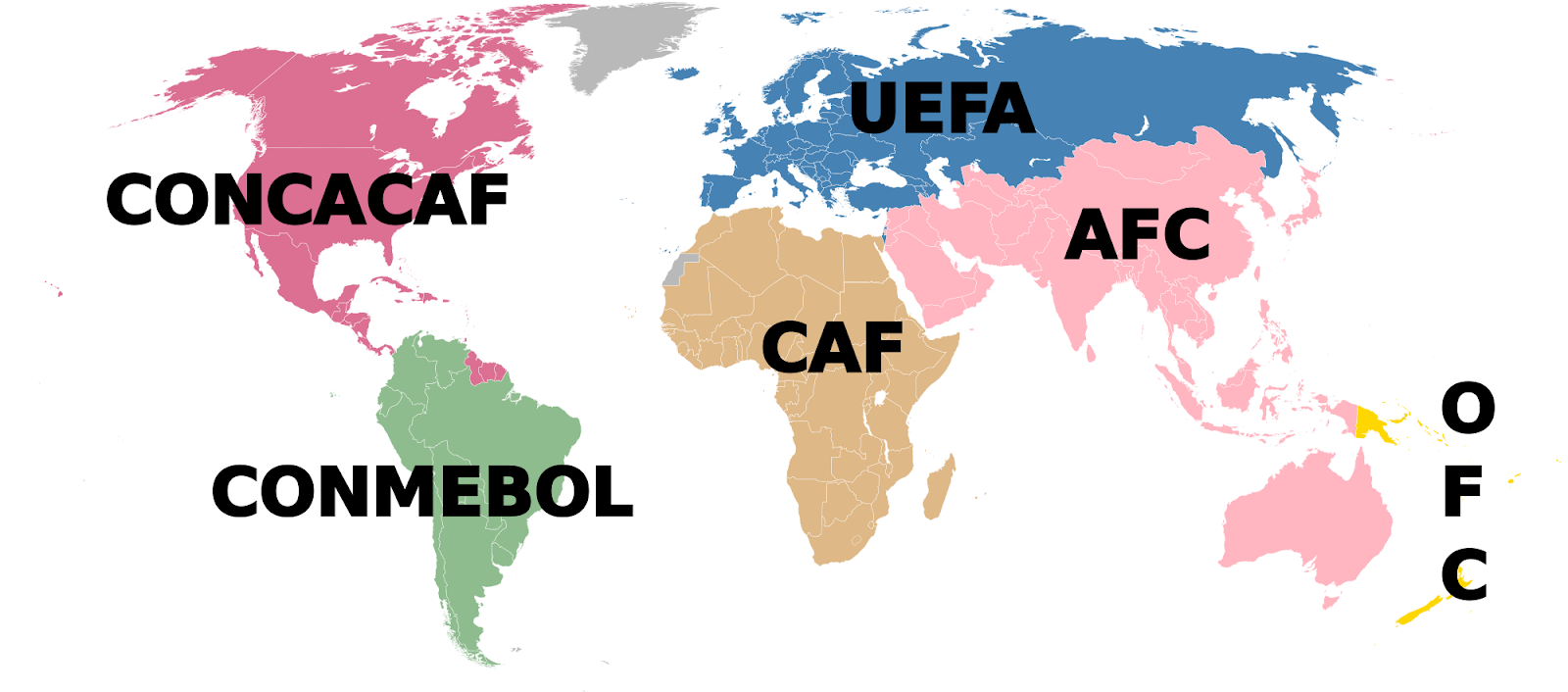
All jokes aside, FIFA, which really stands for Fédération Internationale de Football Association or, for all you Americans out there, the International Federation of Association Football is an incredibly powerful and influential organization. FIFA is the highest governing body of Association Football, or soccer, worldwide. The mega organization was erected in 1904 by a handful of European countries, those being Belgium, Denmark, France, Germany, the Netherlands, Spain, Sweden, and Switzerland, with the task of overseeing international competition among these founding countries. FIFA’s membership has now grown to include 211 national football associations. Each association is a member of one of six regional confederations which include: Africa, Asia, Europe, North & Central America and the Caribbean, Oceania, and South America.

FIFA Global Conference Map


FIFA has publicly outlined a number of goals, the most prominent of those being: to aid in growing football internationally, to provide efforts to ensure football is accessible to everyone, and to advocate for integrity and fair play. FIFA is non-profit organization and is responsible for the organization and oversight of the world's largest single sport sporting event, the World Cup. To put into perspective just how big a deal the World Cup really is, the 2015 Super Bowl between the New England Patriots and the Seattle SeaHawks, which was the most heavily viewed Super Bowl in NFL history, garnered the attention of just shy of 150 million viewers worldwide. In comparison, over one billion people tuned in to watch the France v. Croatia final in the 2018 World Cup. Keep in mind, that was just 1 of 64 games. The 2018 World Cup generated revenues of over 4.6 billion dollars, and the 2015-2018 World Cup cycle ended with a net profit of 1.2 billion dollars.

On paper then, FIFA is a great organization. It is a non-profit that has a defined set of positive goals and brings money to countries and joy to billions of viewers. If only FIFA were in reality what it seems to be on paper. FIFA is not merely a soccer related body. Due to its position, it has been unavoidable for the organization to escape entanglement in international relations and human rights issues. FIFA is, in fact, a member of the UN. Apart from that, as a country, becoming a member of FIFA is one of the clearest signals that a nation has been recognized by the international community. To cite an example, when Nigeria joined the league, it was widely reported as a major breakthrough for international unity.


Nigerias Men's National Team


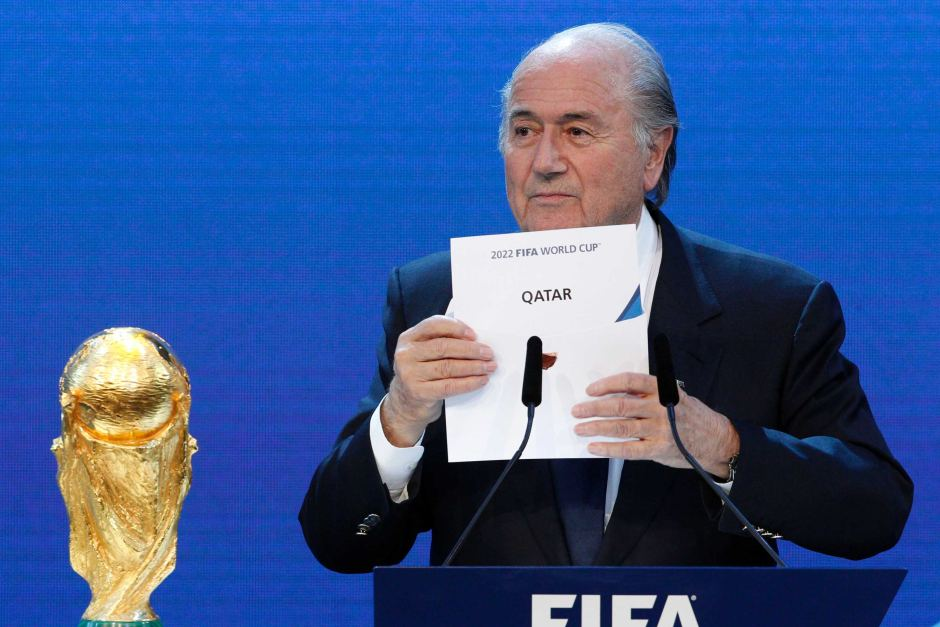
Due to the popularity and subsequent buying power of the World Cup, FIFA exerts an influence over most of the world. Countries wage bidding wars, over the right to host the World Cup. Unfortunately, it seems that high-ranking FIFA employees are not immune to private, internal bidding. Mohammad bin Hammam, who was in the running for President of FIFA, left the organization after major allegations that he had bribed several FIFA officials in order to secure Qatar’s bid, reportedly offering 40,000 dollars to members of the Carribean Football Union. Hammam, predictably, denied allegations of bribery. Despite his resignation, the 2022 World Cup will be held in Qatar. Qatar being picked as the host country isn’t only questionable because of the selection process. In the summer Qatar’s field can reach temperatures of 122 degrees, for this reason FIFA has decided that the World Cup will be held in winter, with the final game being scheduled for the night before Christmas Eve. This bizarre change of schedule puts the World Cup in direct competition with other sporting events. Furthermore, Qatar does not yet have the infrastructure to support the event, so it will have to build everything from scratch, a not uncommon practice for small host countries. Still, Qatar is forging ahead at impressive speed to be ready to host the Winter World Cup in 2022. Its efforts are being guided by FIFA, which inot necessarily a good thing.


Sepp Blatter announcing the location of the 2022 World Cup


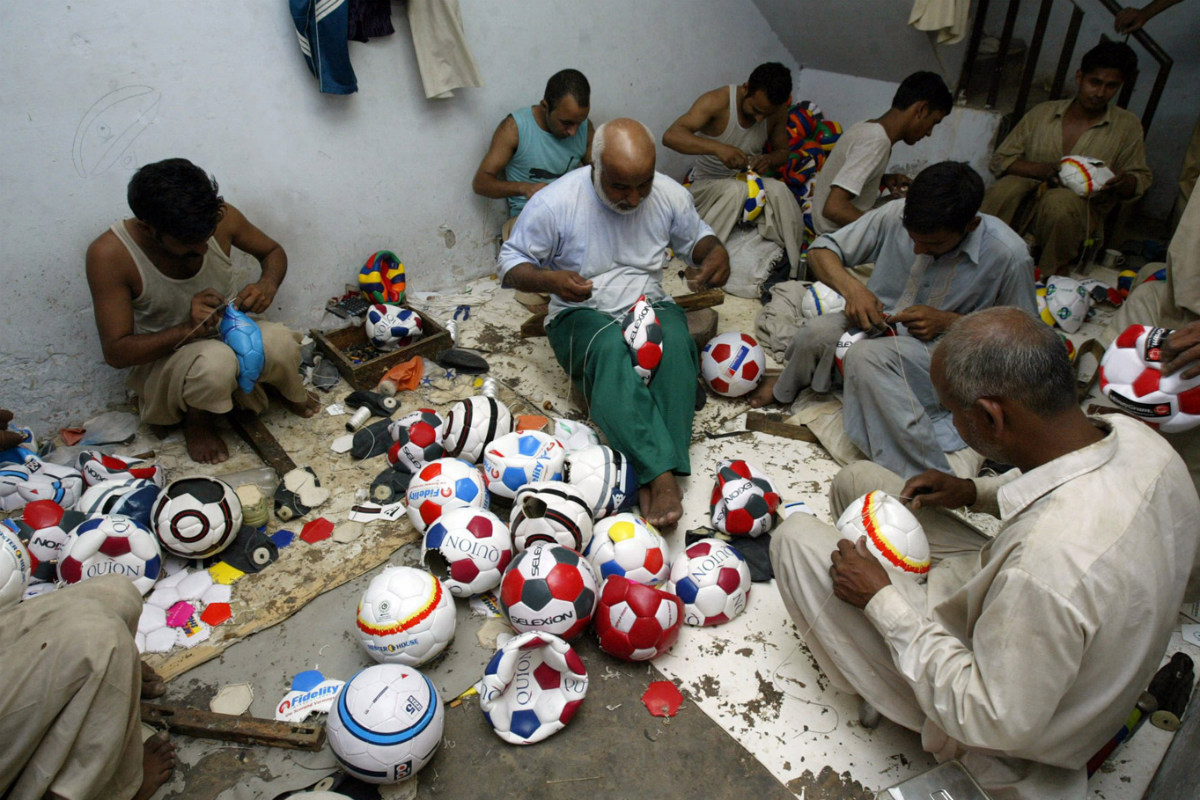
Qatar is a poor country, depending on cheap Nepalian immigrant labor to complete the construction necessary for this endeavour. Qatar is by no means the only country that has used questionable labor practices in a World Cup building effort, but the continued deaths of the Nepalese working on the site is the freshest example of such abuses. South Africa saw strikes over allegations that workers were working more than 18 hour days for the equivalent pay of 23 dollars. The over-scheduled expansion processes of the Sao Paolo airport in Brazil to accommodate anticipated traffic increases lead to an investigation by the BBC which found migrant workers living in inadequate conditions near the worksite and receiving little pay. Now, the International Trade Union estimates that no fewer than 4,000 Nepalese will have died by the completion of the Qatar World Cup construction effort. The poor Nepalean immigrants that work on these sites sign contracts that are mostly written in Arabic or English. They tend to ask few to no questions out of fear of losing the work opportunity. Perhaps the saddest part of this story is that the people working and dieing on these construction sites came to Qatar in hopes of finding a better life. FIFA claims to be talking with Qatar, here have been no signs that Qatar is changing its practices.


FIFA is the undisputed international face of football and controls the media rights and placement of the World Cup. Because of this, it holds enormous power and the placement of billions of dollars are under its control. Enlightened from the recently publicized human rights abuses, some have alleged that FIFA is self-serving and power hungry. These allegations are amplified by FIFA’s long history of questionable financial practices. The Qatar bribery debacle is only the most recent in a long streak of corruption controversies and financial mismanagement allegations directed at FIFA. Sepp Blatter, the 1998-2015 president of FIFA, features heavily in allegations of corruption. He was repeatedly accused of taking over the organization in an illegal manner and then manipulating it for the benefit of third party organizations. Four other prominent FIFA board members have been brought up in allegations of bribery over the past few years, one of which, Paraguay’s Nicolás Leoz, is said to have offered his vote in exchange for a British knighthood.

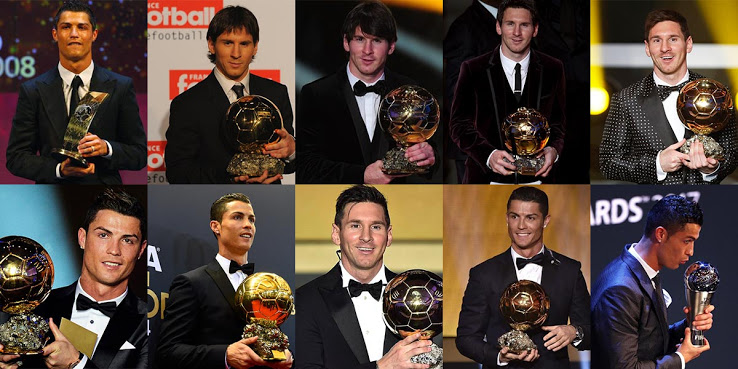
There are a slew of other complaints directed towards FIFA, most of which appear to have merit. Sep Blatter has been accused of sexist and homophobic behavor. He has publically stated that he does not think that gay or trans people should be allowed to play soccer at all and that women’s soccer would be more popular if the athlete’s shorts were made shorter and tighter, thus insulting a huge portion of his audience. Also, FIFA moved too slowly to accept technology and refused to allow cameras to be placed on the goal-lines. The organization held out on this issue for many years, until a goal, left uncounted in an England-Uekrainian game outraged the two countries. The organization is also renowned for hiring refs who make questionable calls. Instead of addressing the issue appropriately, FIFA instead decided to ban instant replays in its games, hoping no one would notice bad calls. Finally FIFA, since 2010 has annually presented the league players who exhibit the best overall performance throughout a year with a Ballon d’Or award. So far, this award has only been achieved by two players, Lionel Messi and Cristiano Ronaldo, the faces of Adidas and Nike respectively.

As of 2020, Lionel Messi has won the award a record six times while playing for Barcelona, followed by Cristiano Ronaldo, who has won five times.


The business of FIFA’s international soccer can never be just about the game. It is about human rights, international relations, and the accountability of international organizations. As of 2016 Sepp Blatter was impeached and replaced by the Swiss-Italian Gianni Infantino. Infantino, elected by the FIFA Congress worked as the Secretary General of the International Center for Sports Studies (CIES) at the University of Neuchâtel. Infantino seems to be leading FIFA in a better direction, but a lot of work needs to be done in order to redeem this simultaneously loved and despised organization.


Recommended Readings for this Post


Jennings, Andrew. Foul!: the Secret World of FIFA: Bribes, Vote Rigging and Ticket Scandals. HarperSport, 2011. https://www.abebooks.com/Foul-Secret-World-FIFA-Bribes-Vote/30342919519/bd

Andrew Jennining is an award winning investigative reporter who spent four years investigating FIFA. His work resulted in the most extensively researched publication of the organization to date. It is worth going into this book with eyes open to the fact that Jenning went into his investigation with the predisposition that FIFA is corrupt.


28, Shady March, et al. “The Dark Side of FIFA: Selected Controversies and the Future of Accountability in the Organization.” Soccer Politics / The Politics of Football, 4 Mar. 2015, https://sites.duke.edu/wcwp/tournament-guides/world-cup-2014/fifa-institutional-politics/the-dark-side-of-fifa-controversies-and-the-future/

This is the best short article you can read to become aware of FIFA’s current issues. All of the information is accurate, concise, and most importantly all in one place. This article is full of great links as well.

Sunday, November 22, 2020

Introduction to the Senchus Mor

      In my previous post, I introduce the Brehon texts and talk about their historical context. In this post, I will introduce the specific context of the Senchus Mor, describe what it covers, and analyze excerpts that can help determine its role in history and Law in general. I will also briefly talk about the important early scholars of this text, and what role it plays in Ireland nowadays. 


     Marx Engels says that "the Senchus Mor has until now been our main source of information about conditions in Ireland." It is indeed true that the Senchus Mor is one of the most influential and detailed document in the study of Brehon Law.

     The text starts with its own introduction, talking about why it was written, who wrote it, and when it was written. It is clearly a postscribed addendum, potentially from someone who wished to alter the interpretation of the text. The first two pages provide a lot of information:


    Evidently, the Senchus Mor was created by the order of King Laeghaire (Loegaire mac Neill, the High King from 428-458AD, supposedly converted to Christianity by Saint Patrick) that wanted to collect all "old laws." This means that he wanted to collect all oral laws and transcribe them to keep them from changing much, and allowing them to spread more easily across Ireland. The nine people mentioned are those who transcribed, compiled, and possibly modified, the laws that ended up in the Senchus Mor. The Patrick that is mentioned in the list is indeed Saint Patrick. 
    The text of the Senchus Mor was actually written in the 8th Century, long after the death of Saint Patrick and King Laeghaire. This means that some of the information given in this introduction is completely false and added to give the text more credibility and legitimacy, which is always helpful with legal texts. It is unknown exactly who wrote this introduction, which would be the best way to find out exactly why this made up information was added; however, it is reasonable to assume it is a Christian monk.
    It is said that all laws that clashed with Christianity were modified or removed to suit Christian Canon. In the next post we will examine how far they went in modifying these laws by looking at the text itself for clues, such as laws that still clash with Christianity, or blatant signs of  modification, such as insertions of prose in the middle of verse text.

    The Senchus Mor is mostly in verse, apart from the aforementioned prose splicing, which seems odd for a legal text, since it is much harder to make verse as specific and concise as prose, as well as keep interpretation relatively simple and less variable. However, all of these laws were memorized in order to have been passed down orally, and verse is considerably easier to memorize than prose, especially for legalese text. Apart from spliced-in prose, there are a few sections that are in prose, mostly within Volume 1. There are supposedly 6 volumes of the Senchus Mor, 3 of which remain in entirety. The first volume covers the law of distress (Archive volume 1), the second covers the law of hostages (Marx Engels), the third covers customary law (Archive volume 3), the fourth covers the law of the family (Marx Engels). All manuscripts we have remaining have annotations, notes, and commentary/translation for some terms, most likely added by copyists.
    Kevin Flanagan of Brehon Law Academy provides an interesting bibliophilical side-note - that the original Gaelic text is read starting in the middle of the paragraph, and then reading outwards, alternating lines above and below, which "gives the impression that the line or principle being discussed is literally being expanded upon." (Brehon Law Academy). However, considering that the original text is no longer available, this may have been the creation of a copyist many years later. 


References:

Ancient Laws and Institutes of Ireland, volume 1 through 6, except volume 2, from Archive.org. Volumes 1-3 cover the Senchus Mor. https://archive.org/search.php?query=creator%3A%22Ireland.+Commissioners+for+Publishing+the+Ancient+Laws+and+Institutes+of+Ireland%22

Flanagan, Kevin. (2014, June 5). Irish Manuscripts: The Senchus Mor. Brehon Law Academy. https://www.brehonlawacademy.ie/single-post/2014/06/05/Irish-Manuscripts-The-Senchus-M%C3%B3r 

[This is a brief piece from Frederick Engels' work on a book he intended to publish, but never finished, known as "History of Ireland." Marxists.org gives the following description of it: History of Ireland is a fragment of a voluminous work Engels intended to write and on which he worked at the end of 1869 and during the first half of 1870. Engels studied a vast selection of literary and historical sources: the works of antique and medieval writers, annals, collections of ancient law codes, legislative acts and legal treatises, folklore, travellers’ notes, numerous works on archaeology, history, economics, geography, geology, etc. Engels’s bibliography, embracing over 150 titles, is selective and includes but a fraction of the sources he studied. It is from marxists.org because Karl Marx did indeed collaborate to some degree with Frederick Engels, as he was a scholar of Irish History, because early Irish society greatly intrigued him.] Frederick Engels. (1870). Marx Engels on Ireland. marxists.org. https://www.marxists.org/archive/marx/works/1870/history-ireland/senchus-mor.htm

Joyce, P. W..(1906). A Smaller Social History of Ireland. libraryireland.com. https://www.libraryireland.com/SocialHistoryAncientIreland/I-IV-2.php

Writers and editors of Stair na hEirann. (n.d.). Brehon Law: the Senchus Mor. stairnaheirann.net. https://stairnaheireann.net/2017/09/15/brehon-law-the-senchus-mor-2/

Wikipedia:

'Loegaire Mac Neill'

Friday, November 20, 2020

[This Place is Not a Place of Honor] Harry Potter and the Goblet of Fire (Used)


My parents bought a Harry Potter book box set for my older sister when we were in second grade, and since then each of those books has been read front to back at least a cumulative 10 times by my family. The first three books had around 200-300 pages, which wasn’t unreasonable for me at the time I read it, though the fourth, the Goblet of Fire, was a daunting 636. It took me the longest to read out of all the books, but I loved it the most, and you can certainly tell from our copy’s battered state. First of all, the frayed cardboard cover of the book is visible through the corners, and the cloth spine is pilled, stretched and caked in dust. The pages themselves have held up only half decently: there aren’t a lot of tears, though the first 30 or so pages have some water damage, and most every page has been dogeared, had their bottom corners bent upwards, and have a crease near the spine where my sisters or I would fold them into place. Yet the most noticeable wear and tear is that a few sections of the book have fallen out completely, and the footband of the book has come unstuck from the spine, revealing more flimsy cardboard and brittle chunks of dry glue, the first 250-something pages of the book only hanging on by the front cover.


    Our copy is somewhat inhibiting to read, and it has to be handled gently to keep the pages from falling out, making it impossible to quickly hide it under the covers when reading with a flashlight past your bedtime. I can’t remember when exactly the book got to be in this sorry state, though it would be somewhere between 6 and 8 years ago. I’ve reread the entire series around 5 or 6 times, and each time I briefly consider purchasing another copy when I reach book 4, until the thought is dispelled by nostalgia. Plus, on recent rereads of The Goblet of Fire, when I reached page 245, I could just put the severed chunk I was reading from in my bag rather than toting around a heavy book. Convenient!

The Future of American Soccer

        What the Future Holds If one were to approach a random stranger and ask him or...