Monday, November 16, 2020

[This Place is Not a Place of Honor] Aesthetic Omens Part 1: Conflicting Opinions on Beautiful Warnings

     The primary objective of a nuclear waste warning marker is to deter future humans from intruding on the site, and to that end, many of the marker proposals, whether physical, symbolic, or cultural, aim to intimidate or unnerve their audience. Physical structures proposed for the Waste Isolation power plant feature purposeful asymmetry, such as the leaning spikes or the thorn field, or are built to purposefully inhibit use of the land, such as patches of rubble or a “black hole” field of land that discourages agriculture or travel over such a sun-absorptive plain. Yet these repulsing structures or images threaten a marker’s secondary objective, that of self-preservation. If a marker is visibly revolting, even a culture still aware of its purpose might seek to tear it down, and if a culture isn’t aware of its purpose, the markers are constructed to appear unsacred and insignificant, offering no incentive to keep them there. 


    Then, perhaps creating an aesthetically pleasing or visually compelling marker could counteract the possibility of its removal by unwelcoming institutions. Whether nuclear waste warning messages should have artistic intentions is a highly debated topic in the field of nuclear semiotics, and it certainly has its pros and cons. The Human interference task force report was still in the early stages of nuclear semiotics, so the question wasn’t given much detail, though they did argue that having some intrinsic aesthetic or educational purpose to the markers might discredit the marker’s portent of danger. Additionally, using artistic markers on the smaller scale-- pictographs and images artistically depicting nuclear waste rather than large-scale architecture-- might implore humans to excavate the site for curatorial or anthropological purposes, reading the signs as “there is art buried here” rather than “there are harmful materials buried here”. Jon Lomberg, of the members of the WIPP markers panel team B and a professional artist himself, urged against symbolic art for waste markers, firstly because art is ambiguous, and though it can be a powerful tool in nonverbal communication, the artistic intent is not always as clear as the art’s depictions themselves. As an example, he referenced how ancient cave paintings clearly depict animals and people, though offers little clue as to why they might have been created, other than simply to create art, which leads into his next counterpoint: art in itself is a purpose. Creating waste markers to be pieces of art might cause its future viewers to believe their purpose is creative expression, not that the art is simply a means to an end. Furthermore, it could attract tourists eager to see the site, encouraging business and settlement around the site, which could lead to more opportunities for inadvertent intrusion. 

    Yet there are many in the field of nuclear semiotics who recognize the potential benefits of aesthetic markers. David Givens, a member of the HITF debated that attractiveness could discourage future societies from destroying the markers, and furthermore, artistic representations of importance, “such as regularity of arrangement, amount of material, homogeneity of elements, regularity of shape, congruity, number of independent elements, symmetry, and degree of random-ness in distribution, show "impressive similarities'' among cultures”. Art history is notoriously adept at preserving cultural memory. One of the members of the WIPP markers panel team A, Dieter Ast, stated “Beauty is conserved, ugliness discarded,” and that creating markers that instill awe in their audience might mitigate the possibility of their removal. 

    Additionally, one of the arguments against aesthetic designs could be construed in their favor; calling attention to the site may reinforce its meaning for a longer period of time, and tourism may even encourage future societies to monitor or protect the WIPP from intrusion. In fact, the Boston group of the WIPP futures panel modeled a scenario where a museum/theme park/permanent world’s fair à la EPCOT is built around the plant, and a fictional character, named Nickey Nuke (a little on the nose to be honest) preserves the memory of the site’s importance through education and entertainment accessible to the public. This was one of the team’s few scenarios in which they concluded no human intrusion should occur, and though it’s an extremely specific scenario, it models the possible benefits of creating the site to be appealing or attractive. 

    In the end, the stance of the Waste Isolation Pilot Plant group was that an aesthetically attractive marker might incur unnecessary risk, or cause the warning to be misinterpreted or discredited. Another reasoning (briefly) given for this position was that using artistic platforms to create a marker would make it extremely difficult to establish any sort of international standard, which would be ideal in ensuring that the message is interpreted as intended (although the task of standardizing the designs from this many interdisciplinary groups is difficult on just a national scale, there is still much work to be done in coordinating any international directive). 

    Somewhat ironically, this lack of an international standard contributes to the fact that other nuclear waste warning projects worldwide don’t share the DOE’s general assumption that marker designs should be unappealing. In 2015, The National Agency for the Management of Radioactive Waste in France, or ANDRA, launched a call for art projects “Imagining the memory of radioactive waste storage centers for future generations", which has since become a recurring contest. A similar agency handling Dutch radioactive waste, COVRA, commissioned artist William Verstraeten to paint their facilities bright orange and create a series of photographs depicting nuclear decay for the interior of the building. The first project was for a (relatively) short term period of ten years, for the purpose of making the facilities understood and accepted by the public, and it seemed to work; they reported the public response to the facilities had gone from mistrustful to welcoming due to the project. Furthermore, independent artists, in national as well as international scenes, have been exploring solutions to the waste warning problem in their own work, creating a wider range of approaches and results than can be found in the DOE reports. These artistic techniques for conveying nuclear danger, as well as whether they can be considered successful, will be covered in a later post.


References

United States, Department of Energy, Office of Nuclear Waste Isolation. Reducing the Likelihood of Future Human Activities That Could Affect Geologic High-level Waste Repositories. Columbus, Ohio, Government Printing Office, 1984. https://www.osti.gov/servlets/purl/6799619

[The Human Interference Task Force, formed in 1981, was the first real effort to create nuclear waste warning messages for the long-term future. Though the majority of their solutions have yet to be implemented, and the Yucca Mountain storage facility project (for which the report was originally intended) has indefinitely stalled, these ideas circa 1984 are the Nuclear Semiotics equivalent of The Old Testament, the original DOE proposals for long-term nuclear waste warning messages.]


Trauth, Kathleen, et al. United States, Department of Energy, Sandia National Laboratories. Expert Judgment on Markers to Deter Inadvertent Human Intrusion into the Waste Isolation Pilot Plant. Albuquerque, New Mexico, Government Printing Office, 1993. https://prod-ng.sandia.gov/techlib-noauth/access-control.cgi/1992/921382.pdf

[If the HITF report of 1984 is the Old Testament of Nuclear Semiotics, the Sandia report is the New Testament. It branches off of the ideas set into motion by the Task force, and presents some of the most circulated solutions in the field, such as hostile architecture and certain pictographs. Additionally, it took an interesting approach to diversifying its ideas by splitting its team into two focus groups; you’ll find the individual reports from each team as well as a general report here.]


Hora, Stephen, et al. United States, Department of Energy, Sandia National Laboratories. Expert Judgment on Inadvertent Human Intrusion into the Waste Isolation Pilot Plant. Albuquerque, New Mexico, Government Printing Office, 1991. https://www.wipp.energy.gov/library/cca/CCA_1996_References/Chapter%207/CREL3329.PDF [This is the final report of the Futures Panel for the WIPP project. It summarizes the teams' findings, methodology and conclusions, and in its appendix you'll find all four individual team reports.]


Codée, Hans D. K. “Give the Public Something, Something More Interesting than Radioactive Waste.” WM’03 Conference, Tucson, Arizona, February 23-27, 2003. https://xcdsystem.com/wmsym/archives//2003/pdfs/37.pdf 

[A conference paper by a representative of COVRA, the facility holding radioactive waste in The Netherlands, detailing the first ten years of their site and the effects of artistically interesting facilities on their public appreciation.]


Choi, Harry. “Nuclear Semiotics.” Medium, Oct 24, 2019. https://medium.com/@mhscho0096/nuclear-semiotics-c10c434a0407 Accessed Nov 14, 2020.

[A more mainstream news source overview of Nuclear Semiotics, though I’d highly recommend this one over other similar sources, as it tends to cover a wide variety of solutions concisely yet thoughtfully, explaining why a certain method may not work in a comprehensive, almost narrative fashion.]


“Preserve and Transmit Memory.” ANDRA, 2018. https://www.andra.fr/nos-expertises/conserver-et-transmettre-la-memoire Accessed Nov 14, 2020. 


Anderson, Kelli. Designing for Deep Time: How Art History is Used to Mark Nuclear Waste. Pratt Institute, Master’s Thesis, 2005. http://www.kellianderson.com/MSthesis.pdf 


Joyce, Rosemary A. The Future of Nuclear Waste: What Art and Archaeology Can Tell Us About Securing the World’s Most Hazardous Material. New York, NY, Oxford University Press, 2020. https://books.google.com/books?hl=en&lr=&id=R8XLDwAAQBAJ&oi=fnd&pg=PP1&dq=art+in+nuclear+waste+warning+messages&ots=Xj5VaDwT9W&sig=yZVml2hgfFBG-rBRLCNV1nLggqE#v=onepage&q=art%20in%20nuclear%20waste%20warning%20messages&f=false 


Carpenter, Ele. “The Nuclear Anthropocene.” Fluid Encounters Between Art and Science Conference, Umea, Sweden, October 2-3, 2014. https://www.academia.edu/10113931/Ele_Carpenter_The_Nuclear_Anthropocene 


Saturday, November 14, 2020

[Status - Brehon] Intro to Brehon Legal Texts. (Preface to Next Week's Post: The Senchus Mor)

 Preface to the Senchus Mor

    The books I will be referring to for the original text of the Senchus Mor are the 6 Volumes of "Ancient Laws and Institutes of Ireland," save volume 2 because I couldn't find it. They are linked below in the references section. 

    Before analyzing the Senchus Mor, I will relay some useful information about Brehon Law in general that is presented in the introductions and prefaces for each of these tomes. First, a timeline of Irish Law would benefit the analysis of legal texts and historical Irish customs and culture. How Irish Law worked before the arrival of Christian monks, and thus writing, is widely disputed. There most definitely was some form of Law that was handed down orally amongst "judges." These judges were men, most likely of a fairly wealthy background. The role of judge was preserved in the family, so the father would train his sons in memorizing and interpreting the law. This created what is known as juristic families, a distinct class in society. 

    Before laws were written down, since they were just orally transmitted, it would be reasonable to assume that Law would vary greatly across the different regions of Ireland. It is difficult to determine whether or not this is true, though some claim this is somehow not the case. These early judges would have judged based on memorized, rhythmic verse, and precedents they learned firsthand or secondhand by other judges. It is possible that purely oral Irish Law was fairly similar across Ireland because, as apparent through mythology and the many hospitality laws, there was a lot of traveling and constant contact amongst Irish towns and settlements. Hospitality laws stated that every free person in Ireland had to offer hospitality to any person other than a criminal or an outlaw, otherwise they would be greatly punished. Every household had to be able to provide warm food and shelter, as well as entertain guests with music and stories. If any person failed to do this, they could lose their eric, or honor-price (like a wergild), or have their status degraded to outlaw. Kevin Flanagan makes the point that this allows for frequent and safe travelling across Ireland, which may have been the original intent of these laws. He also points out that since they could travel frequently and freely, they could interact with more people and exchange knowledge much more frequently and easily. This definitely assisted in transmitting oral Law. 

     Irish law schools were eventually created, although the exact time when they came about is unknown. What we mostly know is that, after the arrival of writing, these schools produced the monumental texts that made Law much more set in stone across Ireland. These texts were produced roughly sometime between the 5th and 8th century, after the arrival of Saint Patrick, Christianity, and writing. They are listed below:

>Di Astud Chor,

>Uraicecht na Riar,

>Berrad Airechta,

>Crith Gablach,

>The two Nemed texts: Bretha Nemed Toisech, and Bretha Nemed Deidenach (and its bastard sibling Uraicecht Becc, which will be discussed in another post),

>The Senchus Mor, and its components: Prologue (added long after the creation of each of the component texts), Cethairslicht AthgabalaeCain SoerraithCain AicillneCain LanamnaCorus Besgnai, and Sechtae

**The 'Early Irish Law' Wikipedia page has great, reliable descriptions of each of these. The 'Origins' section is also worth reading because it talks about Indo-European similarities, as I briefly touched on in another context in my post about Druids.**


    Together, these texts make up the main body of Early Irish Law, collectively refered to as 'Brehon Law,' and cover a huge amount of material. The body of Early Irish law is considered by some to be the most sophisticated in Europe, or even the world, at its time. Together it is considered a civil code, meaning that it deals with the relation between individuals, rather than a criminal code, which deals with the relation of the state to individuals, in which the state is responsible for carrying out punishment. This in fact means that punishment for wrong-doing in Ireland was not taken care of by the state. The only "law enforcement" that was present was a king's army, which he could use for personal matters just as much as assisting in settling conflicts. It was mostly up to the parties involved in the case to resolve their issues according to how the judges prescribed. This was almost always through re-distribution of property somehow. Crimes could be paid off by paying an eric, or any other price of commodities as indicated by legal texts and/or judges. 

    What should also be noted is that it is unknown how many copies of these legal texts were made. There seems to be one of each of these surviving. If there was only one of each at the time, transmission of law would have mostly been oral, and judges would have had to memorize these texts, which means that there inevitably would have been a similar variance in Law across different regions of Ireland.

    The introduction of Christianity also made some significant alterations in interpretation, and maybe even transcription of the Laws. Whether Myth or fact, it is said that Saint Patrick oversaw and taught a new interpretation of Brehon Law, removing what conflicted with Christian canon. On a micro scale, it probably varied how much a judge would lean on Canon Law versus traditional Brehon Law, but there was definitely an impact on all of Ireland, and probably an impact on the texts we have remaining. 

    The introduction and mingling of Christian Canon Law meant more punishment was introduced, including the novel ultimate one, the capital punishment (it is worth noting that revenge killing was commonplace and mostly allowed de facto, so this isn't an insane introduction).

    The Norman invasion in 1171 was the start of the attempt to turn Ireland over to English law. This was mostly successful via force in the 12th century, though it was never fully successful outside of a region known as the English Pale. Even within the English Pale, its enforcement began to weaken in the 13th century (partially because King Edward I used most of the funds that the English government was using to fund his Welsh and Scottish skirmishes), up until the beginning of the 17th century. Although English Law was the de jure Law of the Land, Brehon Law was still the de facto Law. Many judges practiced primarily Brehon Law up until the proclamation of King James I., in which Irish Kingship was dissolved and ruling was replaced with Queen Elizabeth's reign. Many judges and even a Primate of Ireland at one point had to receive pardons for using Brehon Law instead of English Law when they got caught. In the border between the English Pale and the rest of Ireland (mostly called Gaelic Ireland when talking about the English Pale), a unique fusion of Brehon and English Law was created known as the March Law. This meant mostly English laws were in place, but judges were free to improvise some integration of Brehon laws for convenience. I have not found any legal texts dealing specifically with March Law, but I am looking through celt.ucc.ie's database of Hiberno-English Texts as of now (https://celt.ucc.ie//englist.html). 


References


Useful lists of texts: 

CELT: Corpus of Electronic Texts' List of Captured Texts has Hiberno-English, French, Irish, and Latin texts, some of which are translated. https://celt.ucc.ie//captured.html

The Archive.org has volumes 1-6, but no volume 2, of Ancient Laws and Institutes of Ireland thanks to Harvard and the University of Toronto. https://archive.org/search.php?query=creator%3A%22Ireland.+Commissioners+for+Publishing+the+Ancient+Laws+and+Institutes+of+Ireland%22 [The long introductions in Volume 1 & 4 are what I drew most of the information for this post from.]

The 6 volumes of the Corpus Iuris Hibernici by D. A. Binchy, if you can ever find a copy.

The 'Early Irish Law' Wikipedia article has a decent list. Keep in mind that there are MANY more texts than this, these are just the most influential/longest/most popular. https://en.wikipedia.org/wiki/Early_Irish_law

Unbelievable compendium of Welsh original texts from the Library of Wales. https://www.library.wales/discover/digital-gallery/archived-nlw-digital-resources


Other Sources:

https://stairnaheireann.net/2017/09/15/brehon-law-the-senchus-mor-2/

[Everything after the stolen old version of the 'Early irish Law' Wikipedia article is useful, because its all an excerpt from the Laws of Hywel Dda, an actually credible book. It's mostly about Welsh stuff.] Anon. (n.d.). Brehon Laws. The ancient Texts. https://theoldwelshbooks.webs.com/ancientcelticlaw.htm

[Here's the actual Laws of Hywel Dda text]. Anon. (13 Century-ish). Leges Hywel Ddahttps://www.library.wales/discover/digital-gallery/manuscripts/the-middle-ages/laws-of-hywel-dda#?c=&m=&s=&cv=&xywh=-2716%2C-382%2C9042%2C4545


Wikipedia:

'Primacy of Ireland'

'Redwood Castle'

'Early Irish Law'

'History of Ireland (400-800)'

'Bretha Nemed Deidenach'

'Uraicecht Becc'

'Celtic Law'


Thursday, November 12, 2020

Exploring CRISPR and its Possibilities

 CRISPR is a promising treatment in many previously untreatable or hard to treat medical cases, such as cancer, viruses, HIV and countless others. This blog post will be focusing on targeting cancer with CRISPR/Cas9. The goal for this treatment is targeting precise nucleotide sequences in the genome. This is not limited to CRISPR, however CRISPR is the most powerful while offering a great amount of control. 

Cancer presents many problems when looking for treatment options. Because cancer occurs with a mutated strand of DNA that can result in tumors the mutation can be in differing places in different patients, making a single form of treatment next to impossible, considering each case is different. A popular and effective form for cancer treatment is chemotherapy. The goal of this treatment is to target cells that are dividing (mutating) out of control and kill them. (Hair cells divide quite fast which is why people lose hair undergoing these treatments.) 

As mentioned in the previous post CRISPR targets specific areas within the genome while Cas-9 cuts the DNA strand. Looking at this with more detail in the application, the gRNA (guide RNA) is what gets Cas-9 to the targeted area. gRNA consists of 20 base pair guide sequence nucleotides. gRNA also contains Protospacer Adjacent Motif (PAM) which is a smaller base pair (between 2-6 nucleotides) that follow at the end of the gRNA. PAM helps make sure the targeted section is in fact the targeted section. Once the gRNA has guided Cas-9 to its place Cas-9 then makes the cut, this is a Double Stranded Break 3-4 nucleotides after PAM (DSB, meaning it breaks both strands of DNA). Then the repairing can begin. There are two ways that this can occur. 1, DSB is fixed by Non-Homologous End Joining (NHEJ) systems of repair. This is where a nucleotide could be inserted/deleted (InDels), NHEJ is effective however is inclined toward errors, such as a stop codon or frameshift. 2, is repairing the DSB by using Homology Directed DNA Repair (HDR) this serves as donor DNA, which is much less likely to result in error. Example can be seen below.

Please do not hesitate to ask any questions you may have, as always I am happy to answer them.

Bibliography 

White, Martyn K, and Kamel Khalili. “CRISPR/Cas9 and Cancer Targets: Future Possibilities and Present Challenges.” Oncotarget, Impact Journals LLC, 15 Mar. 2016, www.ncbi.nlm.nih.gov/pmc/articles/PMC4914286/.


Wednesday, November 11, 2020

[The Knightly Hub] A Discussion: Crusade Documentation & Research

 Introduction:

    The very nature of the Crusades as a series of military escapades implies that records exist, detailing the events of each whether by a state or by an individual involved. Along these same lines, each organization which arose around this time was bound to be recorded at least once. Whether these records survive, however, is an entirely different matter which leads to gaps in information and thus, interpretation. Where there is room for interpretation, there is also room for more outlandish theories that gradually slip into the realm of conspiracy. 
    Such speculation has existed since the dawn of the Crusading era to some degree or another, as it is unreasonable to assume all literate members of society were constantly and fully aware of the precise details of each distant battle. The presence of gaps and speculation also leads into different derivatives of lesser known stories which can all be equally valuable, although there is generally one favored telling of each history. Such is the case with the Knights of Saint Lazarus, as is mentioned in my personal telling linked here. Even the Knights Templar, one of the most documented orders, has significant gaps in the minutiae of its history due to the sheer vastness of its influence. Evidence of Templar strongholds has been found in North America with little to no documentation of how or why those artifacts came to rest there. Again, with an organization so influential and known even to particularly avoidant scholars and casual movie goers, it invites conspiracy.

Conspiracy:
    Before I begin to list particular scholars and whatnot, I would like to elaborate a bit upon my personal beliefs when it comes to conspiracy theorists and the validity of their work. If this segment seems uninteresting or irrelevant, feel free to skip to the next subtitle.
    I find certain aspects of conspiracy regarding the Knights Templar and related topics interesting. Do I believe every piece of information that arises from such discussions? Absolutely not. I tend to stick as exclusively as I can to interpretations of events that reoccur throughout different official/scholarly texts and, generally, have the strongest and most convincing place in an overall timeline. However, the vast majority of history seems inane when isolated, and history is often proven wrong and altered. Thus, I find it difficult to ignore this aspect of study completely.
    The Conversation  does a decent job explaining exactly how many popular connections formed between the Knights Templar and other exclusive organizations. In this article, it is stated that the Freemason-Templar connection first arose after Andrew Ramsey, a Frenchman, referred to the Knights Hospitallers (St. John) as the ancestors of the Freemasons. This was easily disproven, as the Knights Hospitaller were still very much in existence, and thus he altered his claim to be the Knights Templar. Knights, much like modern-day soldiers, fascinated many individuals who were unable to claim the title for themselves. Fiction surrounding the Knights Templar specifically can be dated as early as the 13th century, where an associating with the Holy Grail was popularized (click here for the true downfall of the Templars). This, of course, is why I personally cannot become too invested in such theories, as many are traced directly to fictional texts. Although, as with many things, it is somewhat fun to become lost among more intriguing stories when the reality of organizations such as the Templars can be almost painfully sobering.

Early Histories:
    Clear documentation of the Crusades is fairly limited, although historians began to interpret and publish their own recollections as soon as the zeal began to die. Fordham University provides an incredibly comprehensive list of sources from the contemporary era, linked here. This particular site also has directories to other topics and eras for those interested. A book I recently purchased is the third volume of Vertot's Hospitaller series: The History of the Knights Hospitallers of St. John of Jerusalem: Styled Afterwards, the Knights of Rhodes, and at Present, the Knights of Malta. I found this text particularly intriguing as it was originally dated 1726. The particular edition I have acquired is a 2017 UK reprint of the original text from the publisher Forgotten Books (ISBN 978-1-331-27248-9 if one wishes to uncover it for them self).

Modern Study:
    Modern study has changed drastically due to the internet, giving ordinary people access to countless rare and unique texts, but in the circles of historians there are certainly texts which stand out among the rest. In the following list I will include a compilation of bibliographies outside of my own which name influential novels and a few of my favorite sources outside of what I have already mentioned.

Andrew Hold, Ph.D. - Historians Rank the "Most Important" Books on the Crusades - A list I will certainly return to and attempt to judge on my own in the future.

ThoughtCo. - 8 Best Books on the Knights Templar - Based on a brief scan of the contents of these novels, I have to agree that these books are certainly among the more reliable. 

Jones, Dan. The Templars: The Rise and Spectacular Fall of God’s Holy Warriors. Penguin Publishing Group; 19 September 2017. (428 Pages). - This is certainly not the most scholarly of texts, as it is very much written to be used for pleasure. The portrayal of the figures mentioned and their descriptions in the novel's appendix is remarkably accurate, although it is worth noting that Jones, again, anglicizes the majority of the names within the novel for readability (this is not a complaint, he even discloses such in the introduction).

Medieval Warfare - Monastic Orders: Knights Templar, Knights Hospitaller and others - I am only linking to this specific page because it relates most strongly to what I have already covered, but there are many other topics explored from the Medieval times (armor, torture, life in general, etc). So far, everything I have read is remarkably accurate and I highly recommend giving this site a read.

ABSOLUTE MUST READ (or at least scan)!!! 
In relation to Fordham University's sourcebook, here is a bibliography by Paul Halsall (18 years of updates!) - https://sourcebooks.fordham.edu/crusades-bibliography.pdf - This mentions the Encyclopedia Britannica as an incredibly trustworthy resource, and I must agree although the articles can be rather vague and useless without a subscription to view the full contents. At the very least, I recommend it as a beneficial starting ground for determining the validity of other sources, but certainly not a stopping point for the general exploration of a topic.

Understanding CRISPR

 CRISPR allows for genes to be edited: this is referred to as gene editing. Gene editing grants the ability to alter the targeted genetic material by adding, subtracting, or changing the genetic sequence. There are a few different techniques that allow for gene editing; however, CRISPR has proved cheaper, faster, more effective and accurate.

CRISPR in bacteria-

CRISPR is an acronym for Clustered Regularly Interspaced Short Palindromic Repeats. These occur in the DNA of bacterium referred to as CRISPR. CRISPR works hand in hand with your immune system. CRISPR is able to copy invading viruses DNA, and record it. 


Looking at the sequence of colored squares (which I will refer to as spacers) separated by diamonds shows us the layout of how this information is stored. The black triangles are the short repeats and the spacers are the copied DNA segment from the invading virus. These spacers are 'genetic memory' as Harvard journal describes and 'mediates immunity'. This plays a major role in your immune system; if the virus is detected again the now transcribed RNA is able to recall the strand of harmful virus DNA and eliminate it. This allows the targeted segment to then be cut by protein 9 (Cas-9), thus disabling the virus. (Diagram shown above). All of this is a natural occurrence within your cells. Research and trials have led to a few adjustments for targeting certain traits within the DNA of your cells. 

Altercations - 
RNA can be made to target certain segments of desired DNA. The newly created RNA binds to the recognized area where Cas 9 then cuts the segment. At this point we are able to return the process to the cells editing system where it can then change the genome.


Please do not hesitate to comment questions if you have them. 


Bibliography 

says:, Paul Harvey, et al. “CRISPR: A Game-Changing Genetic Engineering Technique.” Science in the News, 31 July 2014, sitn.hms.harvard.edu/flash/2014/crispr-a-game-changing-genetic-engineering-technique/.

“What Are Genome Editing and CRISPR-Cas9?: MedlinePlus Genetics.” MedlinePlus, U.S. National Library of Medicine, 18 Sept. 2020, medlineplus.gov/genetics/understanding/genomicresearch/genomeediting/.


-Annabelle

Tuesday, November 10, 2020

[This Place is Not a Place of Honor] The Futures Panel: Writing Sci-Fi on the Government Dime

 The comprehensive report created by Sandia National Laboratories in 1993 was and still remains one of the foremost studies on nuclear waste warning markers. It utilized guidelines and research done by the HITF in 1984, though the iconic hostile architecture design proposals, tiered system of information delivery, and infamous written waste warning (This place is not a place of honor etc.) all arrived from that effort to prevent long-term human intrusion on the Waste Isolation Pilot Plant. Up to now, when we’ve discussed the Sandia Report we’ve been mostly examining the proposals and guidelines put forth by the markers panel. However, another crucial aspect of the process, one which informed the markers panel to create their innovative and adaptable solutions, was the preliminary “futures panel”, whose task it was to chart future methods of human intrusion into the WIPP, examine the probability of various types of intrusion, and model scenarios for the development of human societies over the next ten millennia. This is where we find science fiction bleeding into nuclear semiotics. 

    The Futures Panel, like the HITF and the markers panel, was composed of a wide variety of disciplines: physics, social science, law, science fiction, climatology, and futures research (a deeply intriguing field of study I hadn’t heard of until now) to name a few. They hired 16 consultants, and to fully exhaust every possible scenario, divided them into 4 groups of 4 based on geographical location, each group containing experts in different fields. Due to this split, the panel ended up with a variety of methodologies carried out by each team and differentiating factors for intrusion projected by each one. Specified in the issue statement was the need for broad-based knowledge and creativity in the projections for future societies, and a call for “scenario analysis” of future civilizations, and the product was a vast, interdisciplinary range of detailed, vaguely science fiction-sounding concepts. 

    The Futures Panel first determined the different modes of inadvertent intrusion into the WIPP. Some are what you might already know or expect, such as archaeological or construction-based excavation of a site, drilling for oil, mining, or water impoundment, though a few of these methods may appear less obvious. The Boston team raised the possibility of the Waste Isolation Pilot Plant being reopened for the storage of additional waste materials, and a few of the teams realized inadvertent intrusion could occur from digging transportation tunnels. 

    They then examined potential influencing factors which could lead a society to forget the danger of the site, misinterpret or ignore markers, and pursue these methods of intrusion. All four teams agreed that technological advancement or regression would be a great determining factor in future intrusion, and the patterns of technology might switch back and forth in a variety of ways. The Boston team argued that both technological innovation and stagnation might both increase the likelihood of interference, as more advanced and less dangerous mining tech might increase the incentive to drill on a site, and technological stagnation might promote excavation when resources are scarce. The Washington A team, on the other hand, identified a scenario in which technology stagnates due to 100% efficiency energy recycling, which would make intrusion for resources unnecessary and unlikely. 

    Additionally, population growth would create incentives to excavate the site for potential resources. Economic growth was of foremost concern to only the Washington B team, which argued that other factors such as a need for resources and the industrialization of the future would vary based on wealth, and that trade might cause less technologically advanced communities to have access to drilling technology, without knowledge of the risks drilling at a site would pose. As expected, a lack of awareness would be key, and improper records would largely increase the probability of intrusion, especially if there is only partial memory of the WIPP, as an understanding of the site’s location but not its dangers could incentivize archeologists or salvagers. Two of the four teams asked for consideration of not marking the site whatsoever in order to discourage deliberate exploration by “treasure-hunters”, though the Markers team concluded from their overall recommendations that possibilities of inadvertent intrusion through mining might increase if the WIPP is left unmarked. 

    The last influencing factor is government control, something guaranteed by all four teams, as cultural transitions caused by political change would discontinue the perpetuating information or mythology surrounding the WIPP and cause markers to become lost in translation. Strangely enough, three out of four of the teams modelled specific scenarios in which New Mexico secedes from the United States, two of which predict its annexation by Mexico. 

    These established factors were displayed in a number of scenarios, the variety of which is too great to cover in a single post, but I’ve cherry picked some of the more influential or intriguing ones. 

    The Boston team presented ten highly detailed “point scenarios”, and for each one determined the probability of each of its most important features occurring. A scenario titled “Mysticism and Religion- 2091” projected that an anti-science cult would dig into the site to discover alternate realities and the meaning of life, describing the scenario in a notably detailed style, even explaining the ideologies of the cult and the names of several priests. Of course, the probability is astronomically low that the scenario would take place word for word, down to the religious epiphanies and childhood experiences of a cultist named Senoj, though this scenario echoes some concerns raised against Sebeok’s atomic priesthood, in that the propagation of warnings surrounding nuclear waste may lead some to misinterpret it as religious significance. 

    Also created by the Boston team, “A Feminist World- 2091” presented an extremist female-dominated society, which disregards all science from the 20th century as byproducts of male arrogance, and dismisses the warnings because they discovered they were all created by white middle aged men. The writing arguably villainizes feminism as a movement to reject all men and all scientific knowledge associated with men, rather than it being a push for equality between genders, though this is beyond the scope of my analysis. One thing to gain from the exploration of this scenario is that it does highlight some biases of the WIPP team, and in the conclusions section, the Boston team proposed consulting more women or members of ethnic minorities. 

    A “seesaw scenario” in which technology fluxes between advancement and regression was deemed one of the most dangerous by the Southwest team. In this particular model, an energy crisis after the exhaustion of fossil fuels causes machinery to become unusable, and plunges society into a technological dark age. Overtime, the languages we use today fall out of practice (though, in an interesting detail, they are maintained exclusively by the scholars of religious institutions). Society builds back up to around the level of the 18th or 19th century, until old machinery is rediscovered which is deemed to be much more efficient, and the search for a source of energy to power them up again causes people to drill for oil in New Mexico and eventually breach the WIPP. The rise, fall, and remembrance of technology is a common device in many science fiction stories, and it’s one the Southwest team argued would be both likely and dangerous

    The Washington A team centered their research around the availability of resources in the future, and presented four possible scenarios. The fourth is presented as an optimistic best-case scenario, and many of their recommendations aim to spur societal change in that direction. The ideal that population growth and technological advancement regardless of environmental consequence is disregarded, and humans enter an era of constant harmony and coexistence with the environment. The spare technological efforts are to develop renewable energy to the point of 100% efficiency, and the population remains stagnant to reduce stress on the environment. In this scenario, there would be no need to drill for oil, as no energy shortage or demand is present. It’s a lofty goal, though it does provide a beneficial end goal to their recommendations, one of which is to focus efforts on propagating renewable energy technologies around the site such as solar panels or wind turbines, so there will be no future energy hunger.  

    The Washington B team did not model a highly specific scenario like the other teams, though their “general” projections were arguably the most narrow of all 4 teams, notably affixed to the idea that capitalism is going to be a constant in all human society for the next ten millennia. The majority of their report detailed the projections for the GDP per capita and population growth. Inflation of oil costs would be the most dangerous possibility for the future and the most likely incentive for intrusion, though they argued the lowest possible scenario would be a rejection or erosion of Western powers. If such a “social shock” were to cut people off from Capitalist Western civilization, it would either be due to fanatic religious extremists forcing people to reject capitalist ideologies, or due to some unknown disease afflicting the mind or emotions which would alter human behavior to inflict such an unprecedented “civilization break”. I am by no means exaggerating; these two situations are their only modelled instances in which society would de-Westernize, and of course, both were deemed unlikely. 

    It’s apparent some of these projections are pretty tongue-and-cheek, as the Boston team prefaced their “point scenarios” section with, “Even though we have written the scenarios with an occasional attempt at humor, they have a serious purpose.” Though, as these researchers emphasize, just because a scenario is wildly improbable does not mean it can’t be useful. The same result of intrusion could result from a vast number of societies, and 10,000 years from now there are bound to be aspects of society which sound absurd to us today. Absurd fictional models of the future may be just what we need to provoke creative solutions for an existentially long-term problem, and as a result, their suggestions were relied upon and referenced often in the markers panel report. 


References:

Trauth, Kathleen, et al. United States, Department of Energy, Sandia National Laboratories. Expert Judgment on Markers to Deter Inadvertent Human Intrusion into the Waste Isolation Pilot Plant. Albuquerque, New Mexico, Government Printing Office, 1993. https://prod-ng.sandia.gov/techlib-noauth/access-control.cgi/1992/921382.pdf

Hora, Stephen, et al. United States, Department of Energy, Sandia National Laboratories. Expert Judgment on Inadvertent Human Intrusion into the Waste Isolation Pilot Plant. Albuquerque, New Mexico, Government Printing Office, 1991. https://www.wipp.energy.gov/library/cca/CCA_1996_References/Chapter%207/CREL3329.PDF
[This is the final report of the Futures Panel for the WIPP project. It summarizes the teams' findings, methodology and conclusions, and in its appendix you'll find all four individual team reports.]

Gordon, Theodore, et al. United States, Department of Energy, Sandia National Laboratories. Inadvertent Intrusion into WIPP: Some Potential Futures. Albuquerque, New Mexico, Government Printing Office, 1990.
[The Future Panels Boston team report. It takes a double sided approach, offering general suggestions for what could cause a breach in the WIPP, then adds 10 highly specific narrative scenarios. I would argue that out of the four teams, this one explores the most absurdly creative possibilities.]

Benford, Gregory, et al. United States, Department of Energy, Sandia National Laboratories. Ten Thousand Years of Solitude? On Inadvertent Intrusion into the Waste Isolation Pilot Project Repository. Albuquerque, New Mexico, Government Printing Office, 1990.
https://inis.iaea.org/collection/NCLCollectionStore/_Public/22/064/22064107.pdf
[The Futures Panel Southwest team report. Their research revolved around a few predicted patterns of technological advancement or regression and models at least one highly specific society for each pattern.]

Chapman Duane, et al. United States, Department of Energy, Sandia National Laboratories. Inadvertent Intrusion into the WIPP Repository: Report of Washington Area Team A to the Sandia National Laboratory, U.S. Department of Energy. Albuquerque, New Mexico, Government Printing Office, 1990.
[The Futures Panel Washington A team report. Their focus was placed on availability of energy resources in the future, and modelled 4 general possibilities for technological and societal development due to the society's access to fuel.]

Glickman, Theodore, et al. United States, Department of Energy, Sandia National Laboratories. The Report of the Washington Area Second Team on Future Inadvertent Human Intrusion into the WIPP Repository. Albuquerque, New Mexico, Government Printing Office, 1990.
[The Futures Panel Washington B team report. It's mostly concerned with the state of the economy 10,000 years into the future and how the market's demands might incite intrusion onto the WIPP in search for oil.]

Glenn, Jerome C. “Introduction to the Futures Research Methods Series.” The Millennium Project, Futures Research Methodology—V3.0, April 30 2009. 

Benford, Gregory. Deep Time: How Humanity Communicates Across Millennia. New York, NY: Harper Perennial, 2000. 
[Gregory Benford is a science fiction author who consulted on the Southwest team of the Futures Panel; his first nonfiction book, Deep Time, explores various ways in which humanity has attempted to send messages to future societies, and it recounts his experiences working on the WIPP project. It provides an intriguing personal perspective that's hard to come by between cut and dry government report sources, and you really get insight into the thought process of the panelists, plus his background as an author contributes to its readability.]

Monday, November 9, 2020

The Youth's Sport


  The Next Generation


Today, if you were to grab a random American off the street and ask her what sport she would associate with little children, the odds are her answer would be soccer. Thirty years ago if you were to ask that same question to another random American, the answer would undoubtedly be T-ball, the youth version of America’s favorite past-time. How has soccer, a sport that only 7% of Americans profess to be their personal favorite to watch, become one of the most popular children's sports in the U.S.? Will the beautiful game be able to hold onto that title as the number of children who play sports drop year after year?


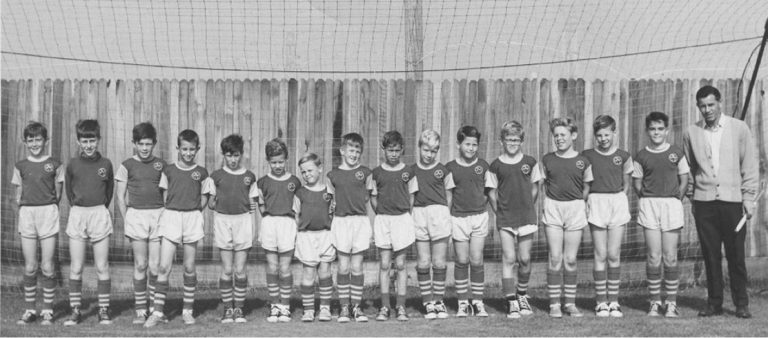
The AYSO (American Youth Soccer Organization) was founded in Los Angeles in 1964, which made it the first youth soccer organization in the states.  Then, the organization was made up of only nine local boys’ teams, and the dreams of a few dedicated volunteers. The AYSO was run out of a garage for the first few years of its existence. Today the organization is the single largest soccer club in the world, with over 600,000 registered players kicking it all across the country. In 1971 the AYOS launched its girls program, a year before Title XI was released, and three years before girls were allowed to compete in Little League. By the mid-1970s the AYOS debued it’s VIP league, a branch of the program reserved entirely for kids with special needs.  Thanks to this development, soccer was added to the list of sports played at the Special Olympics. Presently, 40% of all AYOS players are girls, and there are over 1,500 special needs children playing nationally. Perhaps the most impressive aspect of the AYSO’s success is that it is a non profit organization and charges an average of only 15-20 dollars per a player for a season, about enough to cover uniforms. The AYSO is far from the only large scale youth soccer organization functioning in the U.S. There are over 3.9 million kids playing soccer in American today, and since 2006 America has been the world's leader in terms of youth soccer participation.   

                                        AYSO boys team in Los Angeles (1966)


Soccer is counted the fourth most popular youth sport in the U.S. today, after basketball, football, and baseball respectively. These powerhouse sports, performed at a high level, have each enjoyed great popularity with the American viewing audience in recent history, while soccer has not. Youth soccer could never have thrived, or indeed, even taken off in the states if the only factor was popularity among the general population of adults.  Soccer has a combination of qualities that make it a serious competitor on the youth stage, those being low base price, simplicity, and fun. Soccer is an inexpensive sport when played at a young child’s level, and it is considerably less expensive than baseball and football, with their expensive helmets, pads and other equipment. Soccer is also a sport that can be played successfully at almost any level. It does not require great skill or understanding to play U-6 soccer, and for that matter it does not take much understanding to enjoy watching, which is good for parents who did not grow up playing the game. Soccer also has the potential to grow with each player as he progresses and becomes able to understand more advanced plays and attempt more difficult skills. A player can enter soccer at any level, but he will never outgrow it. Fun is the final reason why soccer is so popular among kids. Soccer is a fun game, and young kids especially, who are not yet biased toward what sports are popular in America at the time, will enjoy a simple sport that rewards creativity and energy, like soccer.


Youth sports are failing in America. There was an average five percent annual decrease in participation in kids sports from 2008 to 2012, with baseball’s participation dropping 6.8%, and basketball, football, and soccer’s numbers dropping 6.3%, 4.9%, and 4.5% respectively. Since 2012 the decline in youth sports participation has almost universally persisted. Fewer kids are signing up, and the ones that are, are quitting earlier.   This is due to an increase in price, time dedication, injury awareness, and higher standards across the board. With prices for participation and demands for time dedication going ever upwards, some parents simply do not value athletics enough for the current commitment level or can not afford it even if they do. Other parents worry about the possible dangers associated with athletics in general and will not let their children compete for that reason. The acceptance of low level play among older kids is falling as well, therefore some kids burn out early by overworking, or are unwilling to work at their sport hard enough to keep up with the competition and are then discouraged from playing because of the time commitment or price. An estimated 70% of kids quit all sports by age 13. Soccer is faring better than most sports with this current downward trend in participation, probably due to recreational prices and being seen as a “safe sport”, but it is still taking a hit. With America currently fighting an uphill war with obesity, in which 17% of all U.S. children are medically classified as obese, an increased enrollment in a certain inexpensive, accessible, fun, cardio-based sport could just be a valuable ally to America’s longterm health.


                                                Recommended Readings for this Post


This is a fairly short history about the AYSO, but it is the one on their website, so it will be very accurate information. The AYSO is a pretty cool organization and it has some impressive figures behind it. Youth soccer’s success is one of the biggest reasons that America’s women have done so well on the global stage, so it is neat to see where that started.


This is another fairly short article. It focuses on the challenges that youth sports are facing today and poses a few solutions. I would recommend reading this one, if for no other reason than to become aware of the issue, because it is an important one.


The Future of American Soccer

        What the Future Holds If one were to approach a random stranger and ask him or...